
Nintendo NES Infinity Gauntlet
After the Disney Marvel Cinematic Universe mess had run its course there was a glut of merchandise that not a whole lot of folk cared about anymore. Much like week old leftovers in the fridge but on a larger scale! Due to the wonders of modern distribution infrastructure a whole bunch of it was also unauthorized and inexpensive in bulk, which is great to work with when you're the type who likes working with junk. Recalling the famous Infinity Gauntlet it seemed natural to take inspiration from the Mattel Power Glove of the 1980s and create a fusion of the two, bearing in mind that the original was pretty janky and did not work well at all. This project was completed in May of 2024.
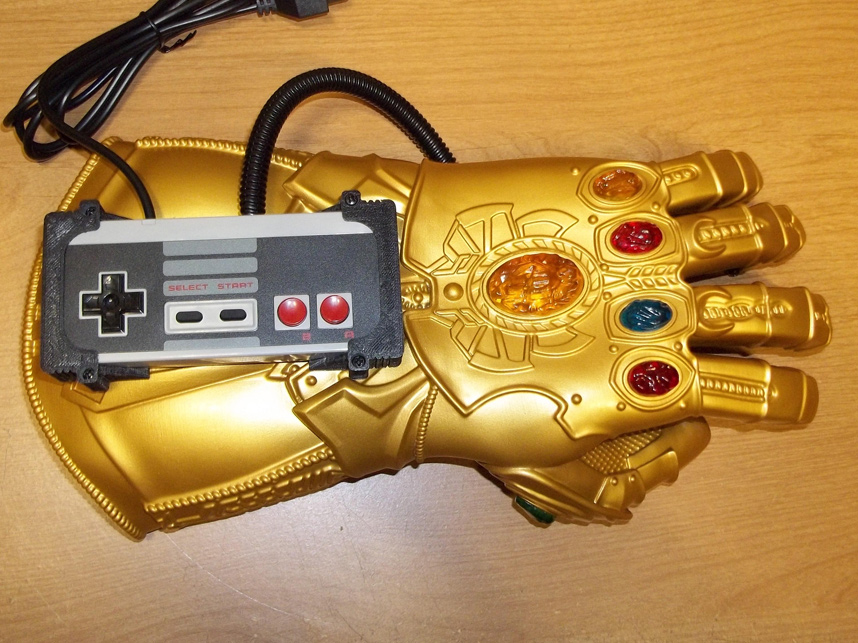
1. Introduction
The NES Infinity Gauntlet (or Infinity Janklet as a friend would call it) is a pretty heavy rubber glove with a Nintendo gamepad bolted onto it- the controller then has all of its inputs routed to the thumb (start), index (A), middle (B) and ring (select) fingers.
In homage to the original Power Glove's rarely reliable use of hand movement to steer your character on-screen there are tilt sensors in the palm to control directions. Holding the glove level with the floor is a neutral position, but angling the palm up triggers up on the d-pad, angled down is d-pad down, so left and right should be obvious.
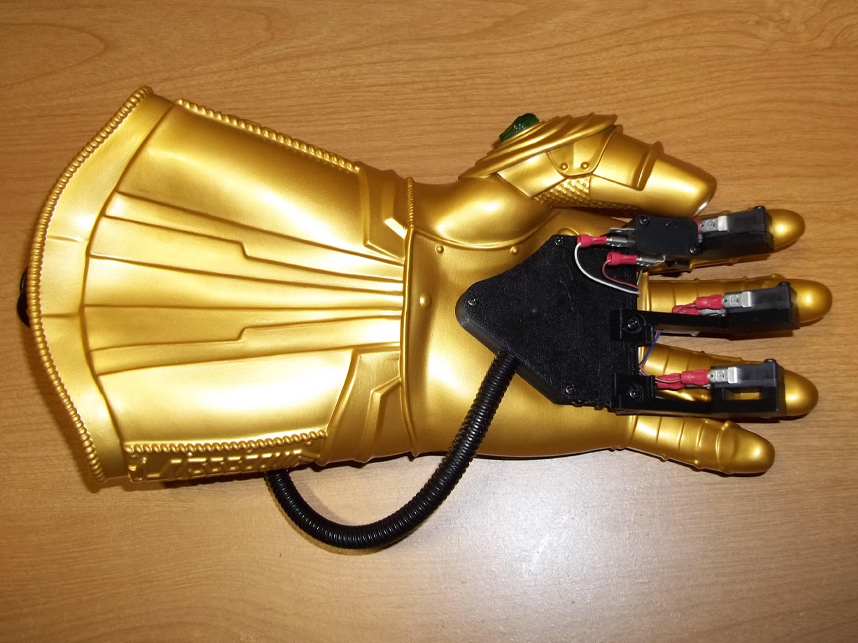
2. Underneath
Below, the housing for the tilt sensor hangs underneath the palm and all wiring for the finger switches route through it, then on to the controller on the other side. Because the glove is a heavy one, the switches each had to be positioned close enough that finger fatigue wouldn't be a major issue when pressing each input.
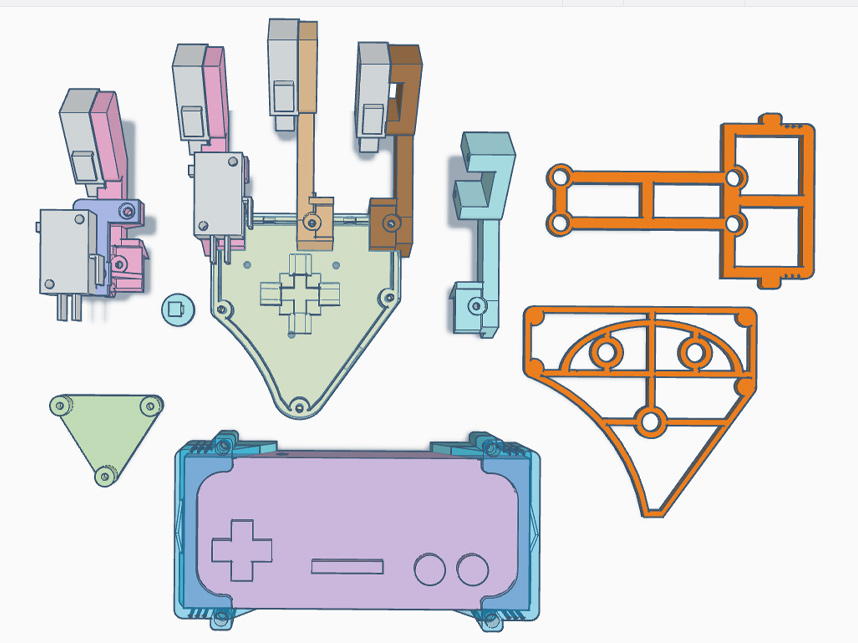
3. Custom Parts
In CAD both the unique parts for mounting the controller and switches were designed, plus templates to consistently attach these parts onto the glove. Consistency is important when several iterations of prototype pieces are to be fitted during development or just to make things easier for duplication of another glove later.

4. Tilt Sensor
The tilt sensor isn't complicated and a custom PCB wasn't even bothered with, just a square of scrap perf board sufficed along with four mercury switches. Mercury switches are reliably fast which was important for this application, but they also place this item squarely in the territory of an adult collectible instead of a children's toy.
Note that they're purposefully angled and mounted upside-down in the palm so that each switch will be inert once the glove is held level to the floor.
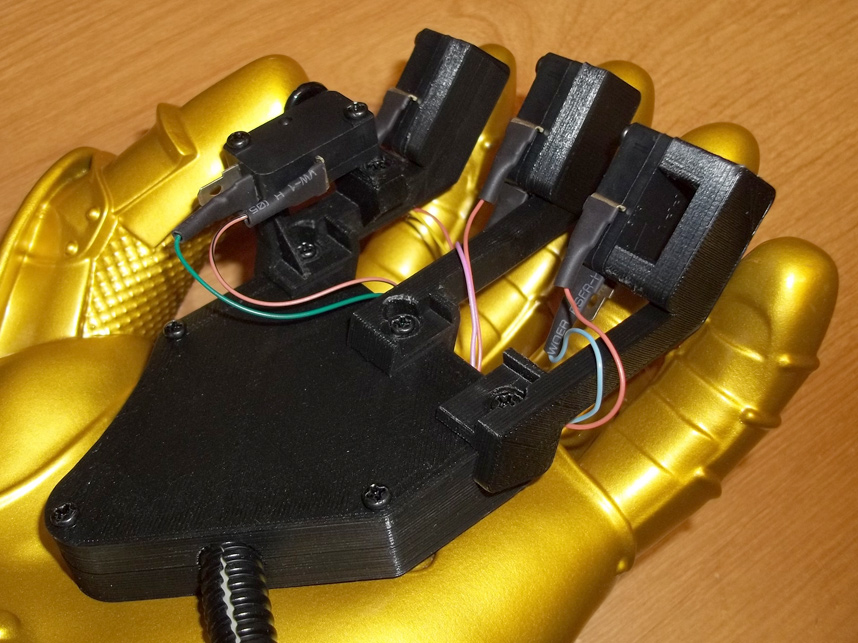
5. Touch Control
The arrangement of each input to a specific digit was given careful consideration and a few trial runs were made before the final layout was chosen.
While the thumb seems obvious at first for a primary input the shape of the glove made repeated presses awkward and tiring, so start (which tends to be used infrequently but is important for pausing most games) seemed the most logical choice.
A/B mirror the placement of those buttons as they would appear on a gamepad, and the ring finger was assigned select since it is usually the least used input of all.
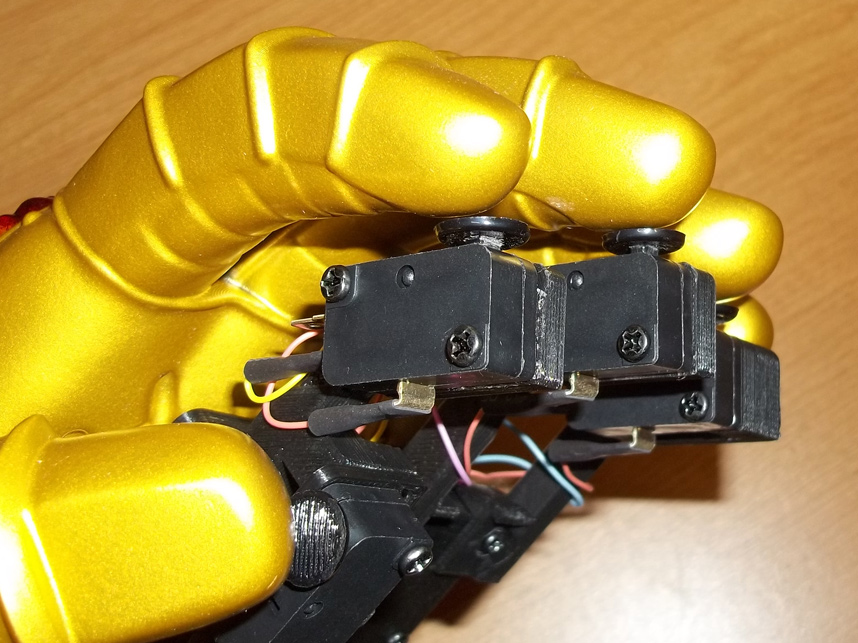
6. Demanding Digits
Noting the small zone of each switch's effective striking surface, they were given large round caps to improve the reach of each digit so the user wouldn't have to fumble for a button blindly during play.
So in the end, how does it play? Predictably janky!
It's fairly hefty and flailing your arm around to push Mario along gets wearying pretty quickly, but it can be fun for short sessions. Lacking nuanced motion control or the need for a sensor array like the original Power Glove means the Infinity "Janklet" is straightforward for the most part. Games that encourage eight-way motion like SHMUPS seem to really shine the most with the tilt-control while platforming titles sometimes feel a little clumsy.